Send Past And Past Participle Form – V1 V2 V3 V4 V5 Form of Send
Do you ever find yourself second-guessing the correct verb forms when writing? If the word “send” has ever caused you a moment of pause, you’re not alone.
Understanding the various forms of verbs is essential for clear communication, and mastering them can elevate your writing from good to great. Imagine the confidence you’ll feel knowing the past and past participle forms of “send” like the back of your hand.
This is your chance to demystify those tricky verb forms once and for all. We’ll break down the V1, V2, V3, V4, and V5 forms of “send” in a straightforward way that sticks. Ready to enhance your language skills and boost your writing prowess? Keep reading to uncover the secrets behind these verb forms.
Send: Base Form And Variations
The verb send is an irregular verb. Its past tense and past participle forms are created by changing the final ‘d’ to a ‘t’, rather than adding ‘-ed’ like a regular verb.
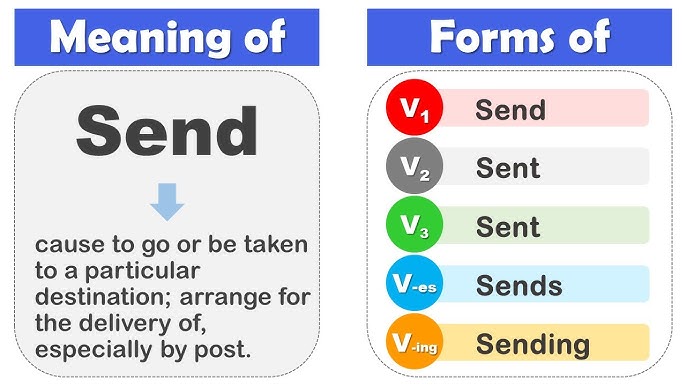
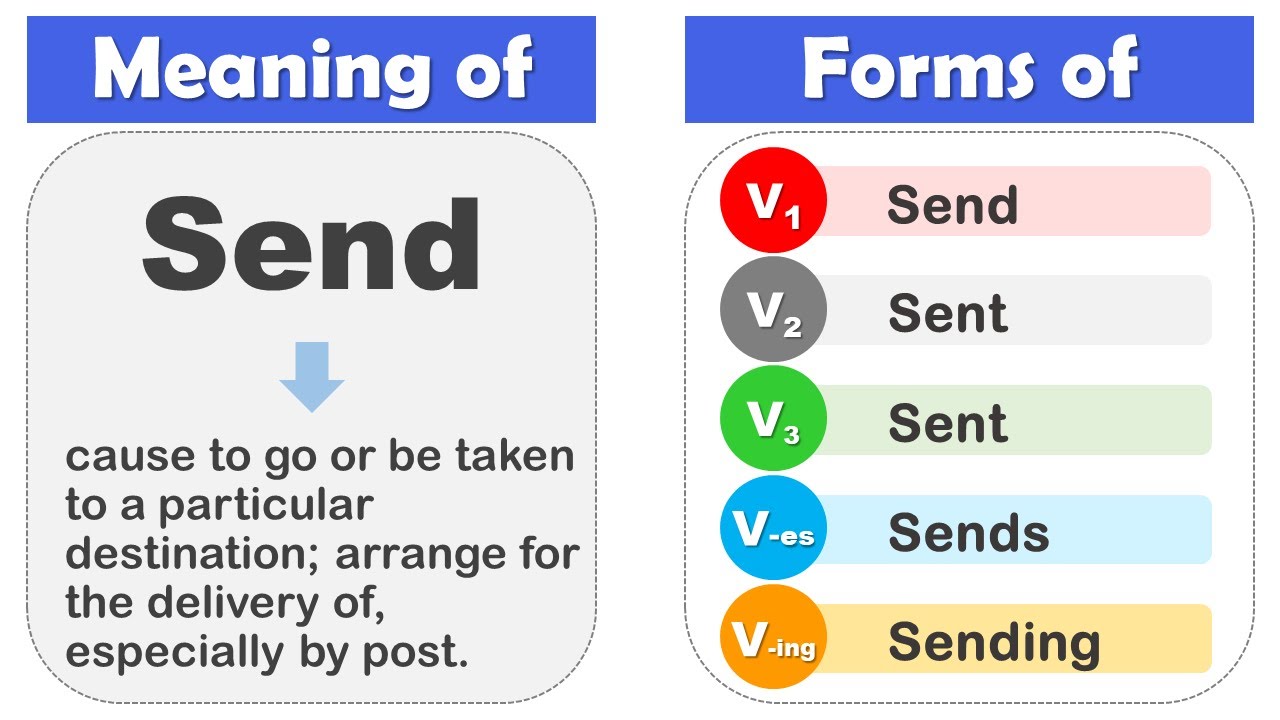
The word send is a common verb. It is used in many ways. Knowing its forms helps in writing. The base form is “send.” This is the simplest form. The past form is “sent.” It tells about past actions. The past participle is also “sent.” It is used with helping verbs.
Let’s look at other forms. The present participle is “sending.” It describes ongoing actions. Another form is the third person singular, “sends.” It is used for he, she, or it.
| Base Form | Send |
|---|---|
| Past Form | Sent |
| Past Participle | Sent |
| Present Participle | Sending |
| Third Person Singular | Sends |
Credit: www.youtube.com
| Verb Form | Description | Example Sentence |
|---|---|---|
| V1 | Base Form / Present Simple (except 3rd person singular) | I send an email every day. |
| V2 | Simple Past | She sent the package yesterday. |
| V3 | Past Participle | They have sent their regrets. |
| V4 | Present Participle / Gerund | He is sending a text message now. |
| V5 | Present Simple (3rd person singular) | The company sends a notification weekly. |
Past And Past Participle Forms
The most common point of confusion for the verb “send” lies in the simple past and past participle forms.
V2: Simple Past (Sent)
This form is used independently in a sentence to indicate an action that was finished before the present moment.
- Example 1: My boss sent the memo yesterday afternoon.
- Example 2: Did you send the flowers yet? (Note: The auxiliary Did requires the V1 form: send).
V3: Past Participle (Sent)
This form is never used alone; it always requires an auxiliary verb to function.
- Perfect Tenses: “I have sent my application.” (Present Perfect)
- Passive Voice: “The letter was sent by registered mail.”
- Adjective: “The sent message was never received.”
The past participle of send is also sent. It is used with helping verbs like “have” or “has.” John has sent the letter already. Sent is used to show completed actions. Many letters have been sent this week. Sent is common in conversations.
| Verb Forms | Example |
|---|---|
| V1 (Base Form) | send |
| V2 (Past Tense) | sent |
| V3 (Past Participle) | sent |
| V4 (Present Participle) | sending |
| V5 (Third Person Singular) | sends |
Continuous And Other Forms
The verb “send” changes in different forms. Continuous forms show actions in progress. “Sending” is the present continuous. “Was sending” is the past continuous. “Will be sending” is the future continuous.
Other forms include the simple present, past, and future. “Send” is the simple present. Sent is the simple past. “Will send” is the simple future. Past participle is “sent.” It helps in forming perfect tenses. Example: “Have sent” is present perfect. “Had sent” is past perfect. “Will have sent” is future perfect.
Understanding these forms helps in writing and speaking. It makes communication easier. Use the right form to express time and action clearly.

Credit: ru.pinterest.com
To understand the verb send, it’s helpful to see how it transforms across different tenses. Since “send” is an irregular verb, its past forms don’t follow the standard “-ed” ending.
Verb Conjugation Table: Send
| Form | Verb | Usage |
| Base Form (V1) | Send | Present Tense |
| Past Simple (V2) | Sent | Past Actions |
| Past Participle (V3) | Sent | Perfect Tenses / Passive Voice |
| Present Participle (V4) | Sending | Continuous Tenses |
| 3rd Person Singular (V5) | Sends | He/She/It (Present) |
50 Example Sentences of Send – V1 V2 V3 V4 V5 Form
V1: Send (Base Form / Present)
- I always send a thank-you note.
- Please send the file by noon.
- They send packages every Friday.
- Can you send me your location?
- We send our best wishes to the family.
- Don’t forget to send the invitation.
- I need to send an email to my boss.
- Do they send international shipments?
- I will send the money tomorrow.
- You should send a representative to the meeting.
V2: Sent (Past Simple)
- I sent the application yesterday.
- She sent me a beautiful bouquet.
- We sent the kids to summer camp.
- The company sent out a mass memo.
- He sent a text message late at night.
- They sent the invoice two weeks ago.
- I sent my regards through a friend.
- The teacher sent the student to the office.
- We sent the broken item back for a refund.
- You sent the wrong document by mistake.
V3: Sent (Past Participle)
- I have sent all the holiday cards.
- Has the package been sent yet?
- The signal was sent from the satellite.
- She had already sent the files before I asked.
- Many emails are sent every second.
- We have sent three reminders so far.
- The invitation was sent to the wrong address.
- Having sent the letter, he felt relieved.
- The data has been sent securely.
- Have you sent the updated schedule?
V4: Sending (Present Participle / Continuous)
- I am sending the link to you now.
- They are sending reinforcements to the area.
- She is sending her kids to a private school.
- We are sending out the newsletters today.
- The computer is sending an error report.
- Are you sending that via express mail?
- He was sending a message when the phone died.
- Stop sending me spam emails!
- We have been sending requests for months.
- The radio station is sending a clear signal.
V5: Sends (3rd Person Singular)
- He sends flowers to his wife every month.
- The sun sends light and heat to Earth.
- My phone sends me notifications constantly.
- She sends her laundry to the dry cleaners.
- The company sends a gift to loyal customers.
- It sends a chill down my spine.
- Every morning, he sends a motivational quote.
- The app sends an alert if there’s a login.
- She sends money home to her parents.
- The heart sends blood throughout the body.
Conclusion
Understanding the forms of “send” is key to using it correctly. The different forms, V1, V2, V3, V4, and V5, help in various tenses. Practice these forms to improve your English skills. Knowing them aids in writing and speaking. This understanding boosts communication clarity.
It also helps in avoiding errors in sentences. Use these forms in daily conversations. It builds confidence in language usage. Keep practicing, and soon it will become second nature. Effective communication begins with understanding verb forms. Stay curious and keep learning.
Happy learning!