Read Past And Past Participle Form V1 V2 V3 V4 V5 Form of Read
Have you ever wondered about the different forms of the verb “read”? Understanding these forms is crucial for mastering English grammar and enhancing your communication skills.
Whether you’re writing an email, crafting an essay, or just curious about the language, knowing the V1, V2, V3, V4, and V5 forms of “read” can make all the difference. Imagine being able to express yourself more accurately and confidently.
You’ll discover how each form is used, with clear examples and simple explanations. Get ready to unlock the full potential of your reading and writing abilities!
Verb Forms Of Read
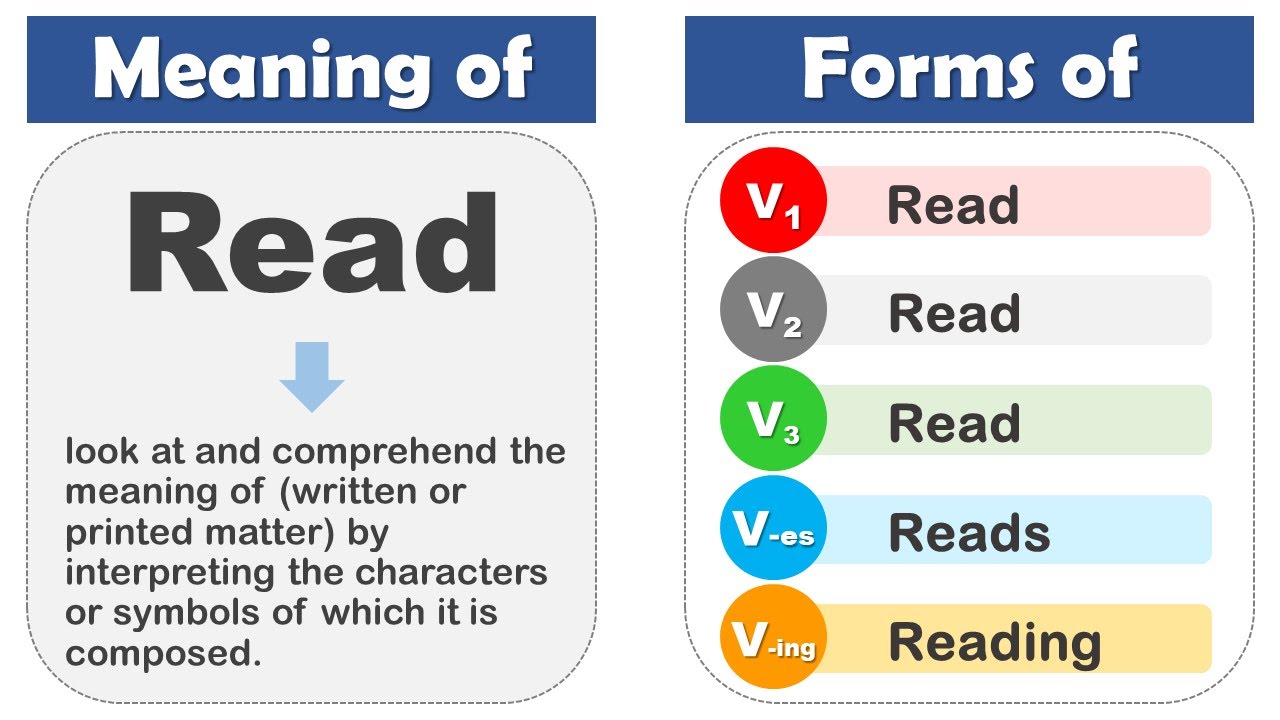
The verb readhas different forms. In the present, it is read. The past form changes to read. It sounds like “red.” The past participleis also read.
In the present participle, it becomes reading. The verb forms help us understand tense. Tense tells us when something happened.
Here’s a quick table:
| Verb Form | Example |
|---|---|
| V1 | Read |
| V2 | Read |
| V3 | Read |
| V4 | Reading |
| V5 | Reads |

Credit: www.pinterest.com
Usage Of V1, V2, V3, V4, V5
The word “read” has different forms. These forms are V1, V2, V3, V4,and V5. V1 is the base form. It is simply “read”. It is pronounced like “reed”. V2 is the past simple form. It is also “read” but pronounced like “red”. V3 is the past participle form. It also stays as “read” and sounds like “red”. V4 is the present participle or gerund form. It becomes “reading”. Lastly, V5 is used in the simple present tense. It is “reads” for he, she, and it. These forms help us speak about time and actions. Understanding them makes English clearer.
50 Examples of “Read” in Context
To help you master how these forms function in different tenses, here are 50 examples categorized by their grammatical use.
V1: Base Form / Present Simple
-
I read the news every morning.
-
Do you read comic books?
-
They read scientific journals for work.
-
We read together as a family.
-
Please read the instructions carefully.
-
You should read more often.
-
I can read three languages fluently.
-
We need to read the fine print.
-
They want to read the new novel.
-
Can you read this map for me?
V2: Past Simple (Pronounced like “Red”)
-
I read that book last summer.
-
He read the email a few minutes ago.
-
She read the story to the children yesterday.
-
We read about the discovery in the paper.
-
They read the entire series in one week.
-
I read your message but forgot to reply.
-
The teacher read the poem aloud.
-
You read the wrong chapter for homework.
-
He read the sign and stopped the car.
-
We read the menu before ordering.
V3: Past Participle (Used with “Have/Has/Had”)
-
I have read this report three times.
-
She has read every play by Shakespeare.
-
Have you read the latest update?
-
We had already read the book before the movie came out.
-
They have read the contract thoroughly.
-
He has read all the Harry Potter books.
-
The document was read by the committee.
-
I wish I had read the reviews first.
-
Has she read your letter yet?
-
We have read enough for today.
V4: Present Participle (Continuous Form)
-
I am reading a fascinating biography.
-
She is reading in the library.
-
They were reading when the lights went out.
-
We are reading the same textbook.
-
He loves reading mystery novels.
-
Are you reading anything interesting lately?
-
The students are reading quietly.
-
I was reading your blog post earlier.
-
Stop reading over my shoulder!
-
Reading is my favorite hobby.
V5: 3rd Person Singular (Present Simple)
-
He reads the newspaper at breakfast.
-
She reads to her daughter every night.
-
My brother reads historical non-fiction.
-
The doctor reads the X-ray results.
-
She reads faster than anyone I know.
-
He rarely reads for pleasure.
-
Every student reads the syllabus on the first day.
-
She reads the subtitles because she can’t hear well.
-
He reads poetry to relax.
-
My cat watches me while she reads my facial expressions.
Common Mistakes
Many people mix up verb forms. The verb “read” is tricky. Its present tense sounds like “reed”. The past tense sounds like “red”. This confuses a lot. The past tense and past participle are the same: “read”. Pay attention to the sentence to know which tense it is.
In different sentences, “read” can change. Sometimes it shows action. Sometimes it shows past events. Be careful with subject-verb agreement. It helps to use verbs correctly. Mistakes happen when verbs do not match subjects. Practice helps make fewer mistakes. Remember these tips to improve your writing.

Credit: www.pinterest.com

Credit: www.facebook.com
Conclusion
Mastering the forms of “read” boosts your English skills. Understanding V1, V2, V3, V4, and V5 helps in daily conversations. Practice using these forms to enhance your fluency. Remember, “read” can have different pronunciations. This depends on the tense. Keep practicing to recognize these changes easily.
With time, it becomes second nature. Learning these forms makes reading and writing more enjoyable. It opens up more opportunities to understand English texts. Stay patient and keep learning. Your efforts will pay off in improving your language abilities. Happy reading and learning!